
Harry Styles Says an Outgoing Ex Taught Him How to Leave the House—Just as Zoë Kravitz Romance Rumors Hit Another Era
Before the walks, the songs and the suspiciously cinematic public sightings, Harry Styles was apparently hiding in hotel rooms. Now he is talking about the ex who made the outside world feel possible.
Harry Styles has spent most of his adult life turning privacy into a luxury product. He gives just enough away to keep the cultural machinery humming, then disappears behind sunglasses, excellent tailoring and a wall of carefully maintained mystery. So naturally, the most revealing thing he has said lately is not about a new album, a famous ex or the woman he is reportedly engaged to. It is about walking.
During a joint Rolling Stone interview with Thom Yorke published Oct. 8, Styles described the strange claustrophobia of early One Direction fame: hotels that felt like bunkers, public spaces that seemed unsafe, and the particular anxiety of being recognizable before he had figured out how to be a person in public.
“When I was in the band, so much of the hotel experience felt very locked-in,” he said. “When I’d be home, it felt like, ‘Oh, it’s not safe for me to be out.’”
Then came the girlfriend with the opposite instinct.
“I had a girlfriend who was very outgoing,” Styles explained. When she was coming to London, he worried that staying inside for three days would make him seem “nuts.” So they walked everywhere. The result, in his telling, was not a grand romantic epiphany so much as a practical one: being outside was, in fact, survivable.
It is a very Harry Styles anecdote—romantic, slightly melancholy and somehow also about urban planning.
The ex who broke the hotel spell
Styles did not name the girlfriend, which is exactly the kind of omission that sends the internet into its detective era. His dating history contains enough famous names to populate a prestige miniseries: Taylor Swift, Kendall Jenner, Caroline Flack, Camille Rowe and Olivia Wilde, along with a long parade of rumored flings and short-lived almost-romances.
But the story itself is less about identifying the woman than understanding what she represented. Styles was describing a person who made ordinary life feel ordinary again. Walking through London, rather than being sealed away in a hotel or transported from one controlled environment to another, became a way to reconnect with the world at ground level.
“It kind of broke that thing,” he said. “Now, it’s changed my life in such a big way, because it’s how you stay connected to the world.”
That detail lands differently when you remember how much of Styles’ public image has been built around movement: the jaunty stroll, the loose shirt, the scarf flying at the exact right angle, the paparazzi-friendly coffee run that looks like it was storyboarded by Sofia Coppola. He has made being seen look effortless, even while explaining that being seen once felt like the opposite.
He also connected walking to creativity, saying he had read that it gives an artist a useful perspective because you notice things from the ground that disappear when you are being driven everywhere. It is a charmingly low-tech philosophy for one of the most photographed musicians on earth. The man has sold out stadiums, but his artistic practice apparently still depends on looking around while wearing comfortable shoes.
Of course, everyone wants the girlfriend’s name
The temptation is to match the unnamed outgoing girlfriend to one of Styles’ most documented relationships. Taylor Swift and Styles were photographed walking through Central Park during their brief 2012-13 romance, a date that became one of the defining images of the early “Haylor” years. Styles later described that period as a learning experience, saying he had wanted a normal date with someone he really liked.
That relationship was hardly normal by the time the cameras arrived, but the image remains potent: two young superstars walking in public, trying to make an ordinary afternoon survive extraordinary attention.
Other exes fit pieces of the anecdote in different ways. Styles dated French-American model Camille Rowe for about a year, and he later confirmed that an ex’s voice appears at the end of “Cherry,” one of his most intimate songs. He was linked to chef Tess Ward in 2017, a relationship she said brought a punishing wave of online hate. He dated Olivia Wilde for roughly two years after they went public at a 2021 wedding, before E! News reported in 2022 that they were taking a break.
None of that establishes which woman Styles meant here, and he did not seem interested in offering a breadcrumb trail. That restraint is part of the point. He has repeatedly pushed back on the idea that being photographed with someone automatically makes a relationship public property. In a separate 2022 interview, he said he had never publicly been with anyone in the way people assumed, and that he had intentionally kept his life away from work private.
Meanwhile, the Zoë Kravitz chapter keeps getting louder
Styles’ comments arrive while the internet is already intensely focused on his reported relationship with Zoë Kravitz. E! News says the pair privately dated for some time and were reportedly engaged in April 2026. The same coverage points to a rare kiss between the two as the kind of public moment that instantly becomes a cultural event precisely because Styles is usually so guarded.
That is the funny thing about Harry Styles’ romantic life: the less he offers, the more meaning gets assigned to every glance, outing and strategically unstrategic sighting. A kiss becomes a “sign of the times.” A ring becomes a headline. A walk becomes a theory about emotional development.
Kravitz, like Styles, understands the theater of not overexplaining. Their reported relationship has attracted attention not because either has offered a detailed public narrative, but because both occupy that rare celebrity category where a single image can trigger a week of group-chat analysis. They look like a couple assembled by a fashion editor with a taste for black coffee, vintage leather and beautifully managed silence.
Still, Styles’ unnamed-ex story offers a more interesting glimpse than a ring-watch ever could. It suggests that his relationship to fame was not solved by becoming more famous, more stylish or more practiced at dodging questions. It was changed by someone who got him out of the house.
There is something almost radical about that in the celebrity economy. No secret villa, no matching tattoo, no lyric decoded from a breakup album. Just two people walking around London until the world stopped feeling like a locked room.
Styles has spent years insisting that the public does not get his whole life. Fair enough. But if this is all he wants to share—a nameless girlfriend, a city walk and the admission that ordinary freedom once had to be taught—then it is more than enough to keep everyone talking.
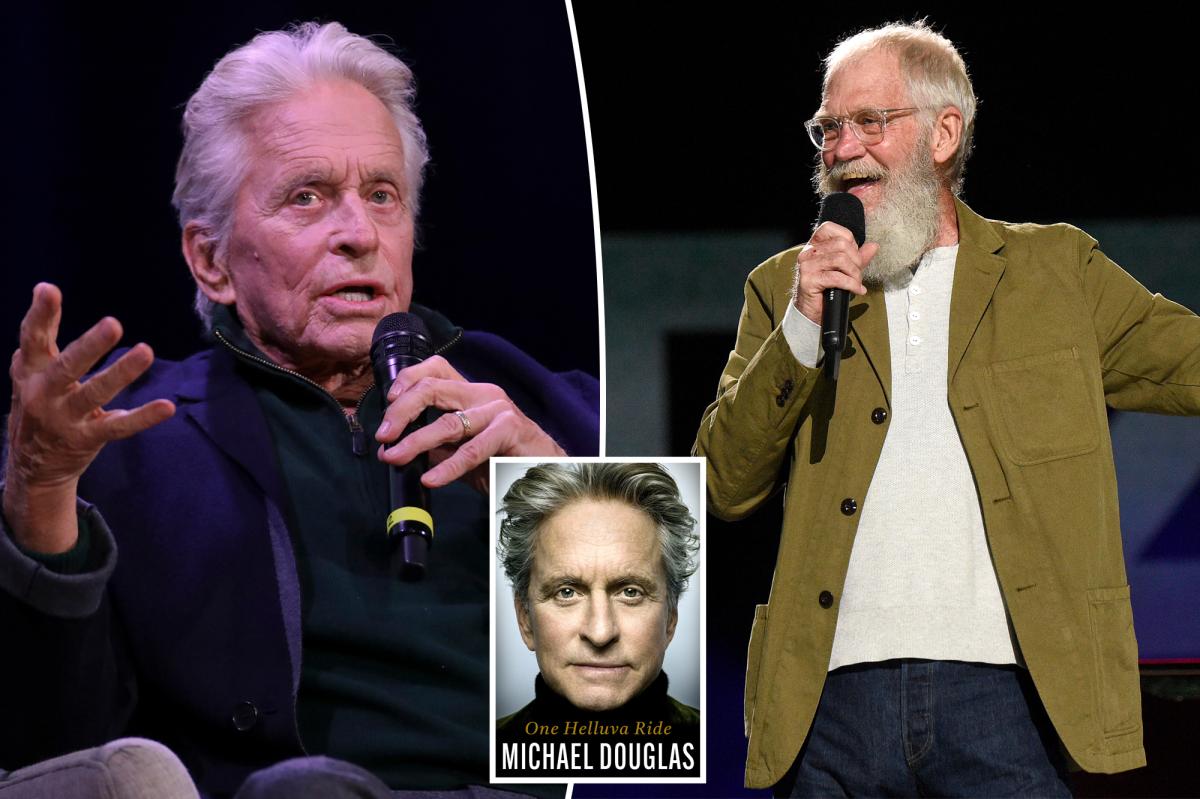
Michael Douglas Says David Letterman Crossed the Line — So He Ghosted the ‘Late Show’ for 18 Years
A surprise commercial, a mother who became the punchline and one very durable grudge: Douglas’ memoir revisits the late-night feud he eventually decided to bury.
Michael Douglas has apparently been carrying one very specific late-night grudge for most of his adult life: the time David Letterman turned a family appearance into a joke, and Douglas decided the only reasonable response was an 18-year television boycott.
In his new memoir, One Helluva Ride, Douglas writes that he had once been a regular guest on Letterman’s show. Then came an appearance that changed the temperature completely. During the segment, Letterman aired a commercial featuring Douglas’ mother, Diana Dill, without warning him, before “starting grilling” him about it.
Douglas says the moment felt less like a bit and more like an ambush. “It felt like he was making fun of my mother,” he writes, according to People. He also describes Letterman as having “a real nasty sense of humor” and says the host had “went too far.”
And so Douglas did what many people fantasize about doing after one particularly humiliating interaction with a famous person: he simply stopped showing up.
The Guest Who Said No
After that appearance, Douglas says he refused every request to return to the show. Not once. Not occasionally. For 18 straight years.
“After that, whenever the producers of the show requested to have me back on, I always refused,” Douglas writes. Letterman apparently sent personal letters apologizing, but Douglas says his feelings did not change. “He had crossed a line.”
There is something wonderfully old-school about the sheer stamina of this grudge. This was not an angry late-night post, a cryptic Instagram caption or a carefully leaked complaint. It was a long, quiet professional no. Letterman could keep sending invitations; Douglas could keep declining them. Somewhere, an assistant was presumably maintaining the world’s most emotionally loaded guest list.
The detail that makes the story land is not just that Douglas disliked the joke. It is that the joke involved his mother, and that he felt he had been denied the chance to prepare for it. Late-night television has always depended on surprise, but there is a difference between being caught off guard and feeling that a personal boundary has been turned into programming.
Douglas’ version of the story makes Letterman’s signature brand of mischief sound considerably less charming when the target is family. The same acidic instinct that can make a talk-show host seem fearless can also make the room feel suddenly smaller for the person sitting across from him.
Then Cancer Changed the Ending
The feud might have remained frozen in place if Douglas had not been diagnosed with cancer in 2010. After that, he decided to “bury the hatchet” with Letterman.
Douglas writes that Letterman was respectful during their conversation and asked sincere, sympathetic questions. For the first time, the actor says, he felt that life was too short to keep holding on to the conflict.
“It felt so nice to clear the air with Dave,” Douglas writes. “Letting go felt like it was more of a favor to myself than to Dave.”
That is a surprisingly unshowbiz conclusion to a very showbiz feud. There was no grand public reunion, no televised apology tour, no dramatic handshake under a studio spotlight. Just two men, one old offense and a decision to stop allowing it to occupy so much emotional real estate.
Douglas’ phrasing also gives the memoir revelation more bite than a simple “celebrity remembers awkward TV appearance” story. He is not presenting the grudge as a trophy. He calls it a weight he carried and says he was done with revenge. The point, apparently, was not that Letterman finally lost. It was that Douglas no longer wanted the win.
The Memoir Is Already Getting Personal
The Letterman chapter arrives as part of a much larger Douglas retrospective. One Helluva Ride, which is out now, also revisits his affair with Jeanne Tripplehorn, his weight loss during his cancer battle and the early days of his relationship with Catherine Zeta-Jones.
Douglas and Zeta-Jones began dating in 1998 after meeting at the Deauville American Film Festival. In the memoir, Douglas recalls telling her during their first evening together, “I’m going to be the father of your children.” It was not, by his own account, an instant romantic mic drop. Zeta-Jones was turned off and walked out of the date.
The story eventually got a glossy ending: the couple married two years later and now share a son and a daughter. But Douglas says the road to exclusivity involved calling and turning down a staggering number of women after Zeta-Jones told him she wanted a committed relationship.
That is quite a memoir rollout: a legendary late-night grudge, a cancer reckoning, an affair bombshell and a first-date line that would make even the most confident person at the bar quietly close their notes app.
Still, the Letterman story has its own special afterlife because it captures a very particular kind of celebrity conflict: not a screaming match, not a social-media war, but a professional relationship quietly severed over one moment that never stopped feeling personal. Douglas eventually made peace with Letterman. He did not, however, rewrite what happened to get there.
For 18 years, the answer was simply no. In Hollywood, that may be the most expensive word in the language.
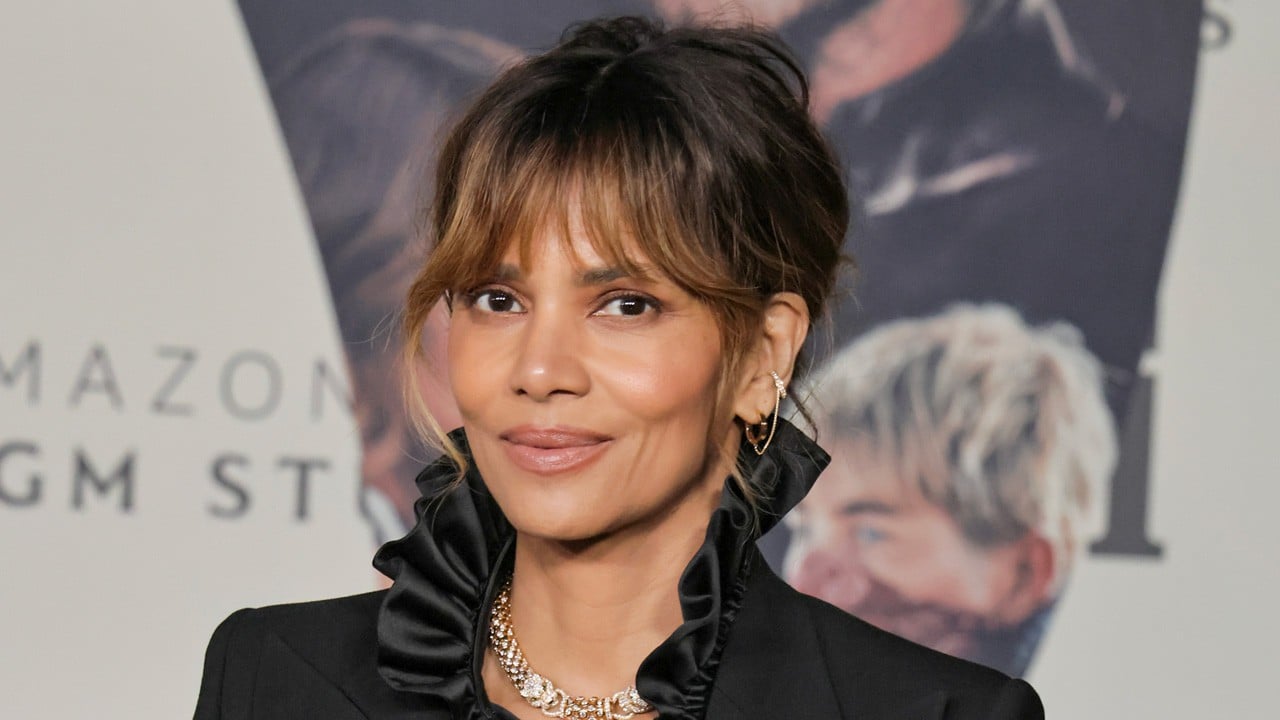
Halle Berry’s 18-Year-Old Daughter Steps Into the Family-Court Fight — and Says She’s “Shocked” by the Claims
Nahla Aubry submitted a declaration defending her mother after Olivier Martinez sought a temporary restraining order involving their 13-year-old son, Maceo.
Halle Berry’s family drama has moved from the courthouse into the voice of the daughter who has lived inside its complicated co-parenting history for most of her life.
Nahla Aubry, Berry’s 18-year-old daughter with ex-partner Gabriel Aubry, submitted a declaration in Los Angeles Superior Court defending her mother after Olivier Martinez sought a temporary restraining order involving their 13-year-old son, Maceo. According to Just Jared, Nahla said she was “shocked, very sad, and very upset” when she learned of Martinez’s allegations against Berry.
That is a striking escalation in an already intensely personal dispute: not just one ex-spouse accusing another, but an adult daughter stepping into a legal fight involving her younger brother, her mother and both sides of the family’s long-running custody history.
Nahla’s defense is personal, detailed and very much about the home she says she knows
Martinez, 60, alleged in his filing that Maceo told him Berry had physically attacked him and placed him in a chokehold. Berry has denied the allegations. A judge nevertheless granted Martinez’s request for a temporary restraining order, meaning the filing has already produced an immediate court response without resolving the underlying claims.
In her declaration, Nahla described Berry as a “loving and devoted parent” who is “warm, supportive, and deeply involved,” while also acknowledging that her mother can be strict and expects her children to follow rules. Nahla said she has never seen Berry hit, slap, choke, grab or physically abuse Maceo, and specifically denied witnessing conduct resembling the allegations made against her.
She also pushed back on the idea that ordinary physical play between a parent and child could be read as something darker. Nahla said she had seen Berry and Maceo playfully wrestle, tickle each other and roll around laughing, but said she had never seen Maceo become hurt or distressed afterward. Those details are now part of a legal declaration, which gives the family’s everyday life an unnervingly public afterlife.
The tone of Nahla’s statement is less celebrity daughter issuing a polished defense and more older sibling trying to describe the household she says she has actually experienced. She wrote that she has lived with Maceo for most of his life and believes he loves Berry and shares a close bond with her. She also described occasions when Maceo was disrespectful, aggressive or unwilling to follow rules at home.
The family history makes every sentence heavier
Berry and Martinez married in 2013, separated in 2015 and share Maceo. Berry shares Nahla with Aubry, and Nahla said her mother coordinated the children’s schedules after the separation so the siblings could spend time together. She portrayed Berry as a parent who attended games, drove Maceo to practices and tournaments, and advocated for his education, medical treatment and therapy.
She further claimed that Berry never spoke negatively about either of her children’s fathers and encouraged them to maintain loving relationships with both men. That assertion matters because the current dispute is not happening in a vacuum; it is unfolding inside a blended family whose custody arrangements and old resentments have been publicly scrutinized for years.
Nahla also made a separate allegation about Aubry, saying she remembers Martinez beating up her father in a driveway when she was a child. That claim, included in her declaration, adds another volatile layer to a family history already shaped by legal conflict. It is also the kind of detail that can turn a present-day custody dispute into a retrospective accounting of every fracture the adults thought they had left behind.
Neither Berry nor Martinez’s filing, as described by Just Jared, settles the competing accounts. Nahla is offering her own perspective as someone who says she was frequently present in the home, while Martinez’s allegations concern an incident involving Maceo and remain contested by Berry. The court proceedings will determine how those claims are handled; social media, predictably, is already treating the family’s private history like a season finale.
The most painful detail is that Nahla says she cannot reach her brother
Nahla said she spoke with Berry and Maceo on the same phone call two days after the alleged incident on September 29, and that Maceo did not seem upset. She also said she has not spoken with him since Martinez filed the allegations because she is unsure what is legally permitted.
That separation appears to be weighing on her as much as the accusations themselves. Nahla wrote that Maceo is her brother, that she cares deeply about him and that she is concerned about the impact of the proceedings on his relationship with Berry. Her statement frames the case not only as a battle between former partners, but as a rupture between siblings who are suddenly being forced to navigate court rules around one another.
She said she felt like “an afterthought” in Martinez’s effort to destroy her mother, a deeply emotional characterization that shows how directly the dispute has reached her. It also explains why her declaration has landed with such force: Nahla is not merely defending Berry’s public image. She is describing what she believes is happening to the family around her.
For Berry, the legal stakes are immediate and the public stakes are familiar. She has spent years being discussed through the lens of her relationships, custody battles and intensely visible private life. Now her daughter’s testimony has pulled the family dynamic into sharper view, with Nahla presenting Berry as a present, demanding and protective parent rather than the person described in Martinez’s allegations.
The case will continue in court, where the adults’ claims and Maceo’s welfare—not the internet’s preferred storyline—are supposed to be the focus. But the image that lingers is painfully simple: an 18-year-old trying to defend her mother while worrying about the younger brother she says she cannot currently speak to. Celebrity family drama is usually packaged as spectacle. This one has a teenager’s life at its center, and that makes every headline feel heavier than usual.