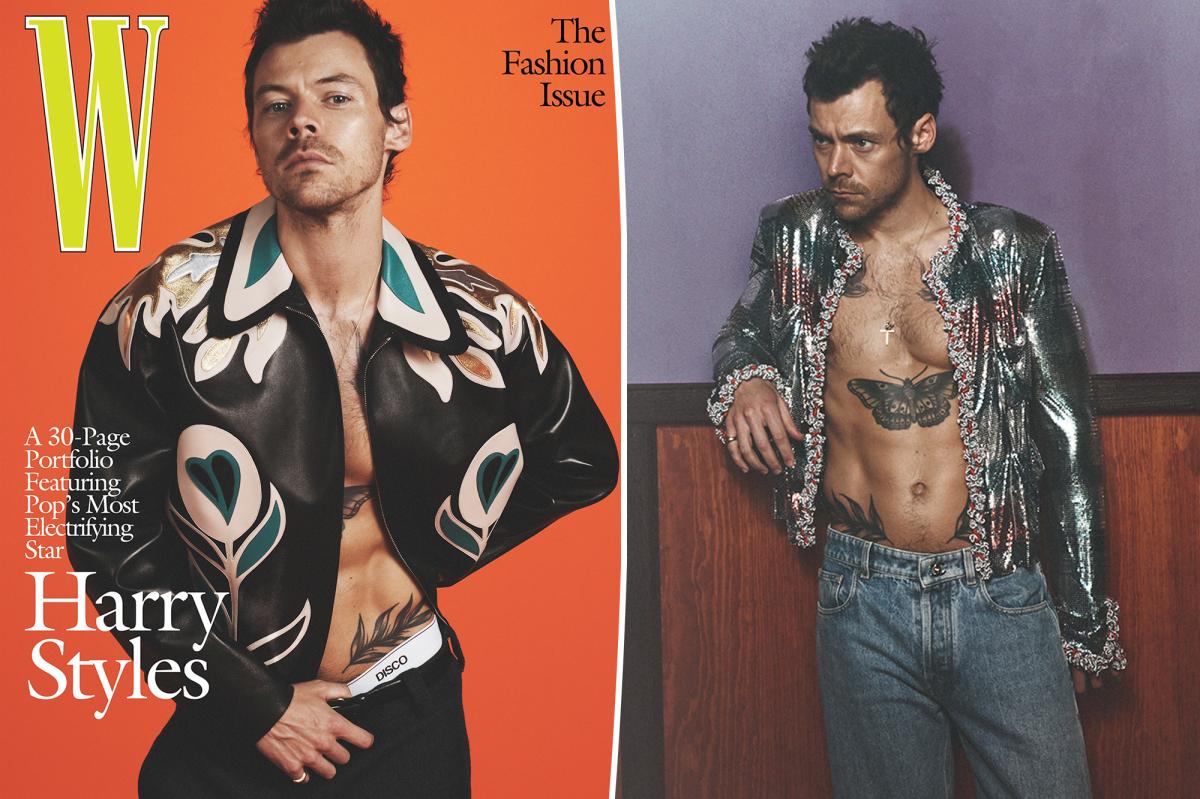
Harry Styles Trades His Shirt for Chanel in W Magazine
Harry Styles has once again made the shirt optional—and this time, Chanel is involved. Page Six reports that the singer appears shirtless in Chanel for W magazine’s September issue, giving the fashion title a very obvious cover-story advantage: one of pop’s most recognizable faces, styled in one of luxury’s most recognizable names.
The appeal is straightforward, but not exactly basic. Styles has long occupied the overlap between music celebrity and fashion fixation, where a wardrobe choice can become part of the headline rather than a footnote. A shirtless Chanel shoot turns that equation up a notch: the label supplies the polish, while Styles supplies the kind of visual hook that makes a September issue difficult to ignore.
There is also a neat bit of editorial strategy here. September fashion issues traditionally arrive with outsized expectations, and a celebrity image built around glamour, skin and a famous logo is designed to travel well beyond the magazine rack. Even before readers get to the full package, the pairing does the promotional heavy lifting. It is less a quiet style moment than a carefully calibrated collision of luxury branding and pop-star magnetism.
Crucially, the available report is about the shoot itself, not a new romance, scandal or musical announcement. That makes this a fashion story with a gossip-friendly silhouette—not a coded message waiting to be decoded. Styles in Chanel is enough of a headline without assigning secret meaning to every exposed collarbone.
For W, the move puts a major celebrity at the center of its September conversation. For Chanel, it links the house to a performer whose public image has always allowed room for both classic polish and a little provocation. And for Styles, it is another reminder that his celebrity operates on multiple runways at once: stage, screen, red carpet and, now, a magazine spread engineered to make people look twice.
Page Six is currently the sole source identified in this story cluster, so the details should be read as reported rather than independently verified by BAD GOSS. Still, the central hook is clear: Harry Styles, shirtless, in Chanel, for W. Some fashion math does not require a calculator.
Margaret Qualley Joins Red Carpet’s Barefoot Hall of Fame
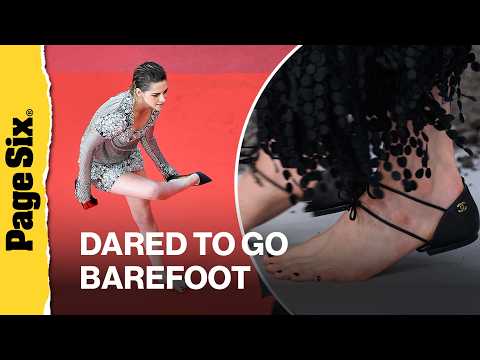
Red-carpet dressing is usually a precision sport: gown, jewelry, clutch, heel, repeat. Margaret Qualley recently disrupted that formula at the London premiere of The Dog Stars, where she wore a black embellished gown with Chanel’s peculiar “barefoot sandals,” according to Page Six. The result was less traditional footwear than a fashion-world optical illusion—part shoe, part exposed foot, and fully committed to making everyone stare downward.
The Chanel design has become a particularly easy target because it appears to split the difference between going barefoot and wearing something decorative. Qualley’s appearance gave the style one of its most conspicuous off-runway showcases, placing an unusual runway idea in the unforgiving ecosystem of a movie premiere, where every hemline and toe can become the story.
But the larger hook is that Qualley is not alone. Page Six’s video roundup places Kristen Stewart among the celebrities who have appeared barefoot on the red carpet, framing the look as a recurring celebrity-fashion move rather than a one-night experiment. That distinction matters: exposed feet can read as rebellious, practical, deliberately casual or simply startling, depending on the outfit surrounding them.
There is also a small power play in refusing the expected heel. Red carpets ask celebrities to look polished while enduring an outfit’s most theatrical demands. Going barefoot—or wearing a design that mimics it—rejects the idea that glamour has to arrive on a stiletto. It can also make the dress do more of the work, leaving the eye to follow the silhouette instead of stopping at a conventional shoe.
Still, this is not a styling choice with much room for subtlety. A dramatic gown paired with ordinary pumps disappears into the familiar red-carpet formula; a dramatic gown paired with visible toes becomes an instant debate. That may be exactly why the look keeps returning. The fashion is unusual, the photographs are memorable, and the comment section gets a job.
For now, the supplied reporting gives us a clear fashion pattern and two recognizable names attached to it, with Qualley as the latest example highlighted by Page Six. Whether barefoot dressing becomes a lasting red-carpet staple or remains a reliably strange celebrity detour, it has already achieved the one thing fashion’s oddest ideas need: people are still talking about the feet.

Dolly Parton’s Private Marriage Still Has Everyone Curious
Dolly Parton has spent decades making herself wonderfully legible to the public: the songs, the wigs, the one-liners, the rhinestones. Her marriage is another story. A retrospective from E! News turns the spotlight toward Parton’s relationship with Carl Dean, the husband who has remained notably outside the celebrity machine.
That contrast is the hook. In an industry where romance is often treated like a promotional asset, Parton and Dean’s nearly 60-year marriage has been defined by privacy. Us Weekly is also revisiting the couple’s long relationship, giving the story cluster a rare focus: not a new split, a suspicious photo or a social-media breadcrumb, but the endurance of a partnership that has largely resisted public packaging.
“Ultra-private” can be a tired celebrity descriptor, but here it is the entire plot. Dean’s relative absence from the fame cycle has helped keep attention on the fact of the marriage rather than turning every appearance into a referendum on its health. That is a meaningful distinction in gossip terms. The less access the public receives, the more carefully every retrospective has to handle the line between curiosity and entitlement.
Parton’s celebrity makes the restraint especially striking. She is one of the most recognizable performers in the world, yet the relationship does not function like a conventional celebrity brand extension. There is no built-in expectation that the couple must constantly perform together for cameras, sell a shared image or narrate every chapter in real time. The mystery is not necessarily manufactured; it may simply be the result of keeping one part of life offstage.
That gives this retrospective a different flavor from the usual anniversary coverage. The appeal is not a fresh revelation so much as the steady fascination of a marriage that has outlasted multiple versions of celebrity culture. Parton’s public persona is famously expansive, while her relationship has remained comparatively contained. That split makes the romance feel more intriguing, not less.
For readers, the takeaway is refreshingly simple: Parton and Dean are still being discussed because their marriage has stayed durable without becoming constantly available. In a fame economy built on access, their privacy is the rare headline that keeps its shine.