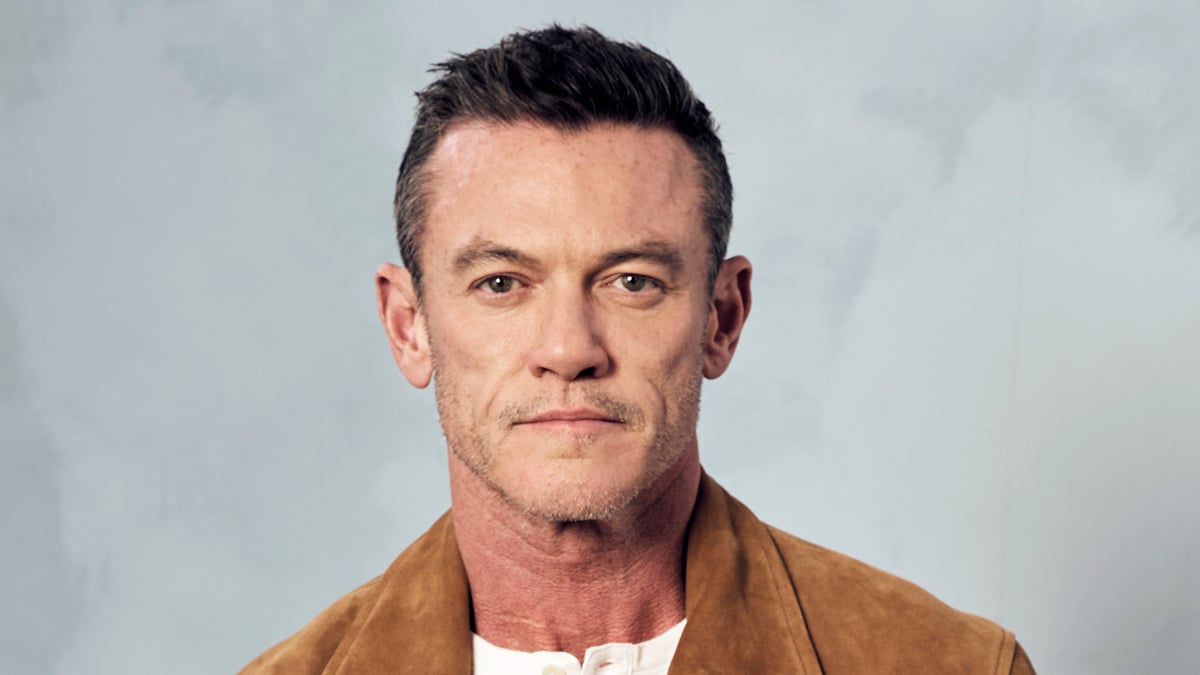
Luke Evans Said Being Gay Doesn’t Automatically Make You “Woke.” The Internet Heard the Alarm Bells.
After a Telegraph interview turned one sentence into a headline magnet, the openly gay actor returned to Instagram to say he absolutely considers himself woke — and that his point was about disagreement, not disengagement.
Luke Evans has discovered the oldest law of celebrity interviews: say one complicated thing in a long conversation, and the internet will lovingly place it under a spotlight, remove the surrounding furniture and ask why you are standing there.
The Welsh actor is now clarifying comments about being gay and “woke” after a line from a recent Telegraph interview sparked headlines and backlash. Evans, 47, told the publication that “just because you are gay yourself doesn’t mean you have to be woke,” adding that sexuality is only one part of a person’s identity and that gay people, like everyone else, do not automatically share the same opinions about society or politics.
It was a sentence practically engineered for the current attention economy: short, provocative and carrying a word that has spent the last several years being used as everything from a political insult to a personal compliment. The quote began circulating as a kind of identity pop quiz. Is a gay actor allowed to be “unwoke”? Does being part of a marginalized community come with a mandatory political vocabulary? Can a person reject the label while still defending the values people associate with it?
Evans’ answer, after the headlines arrived, was less “I said what I said” and more “please read the rest of the sentence.”
The sentence that started the spiral
In the interview published October 2, Evans said: “Just because you are gay yourself doesn’t mean you have to be woke. Your sexuality is one part of who you are, but our opinions on society and life differ in every single person.” He went on to say that he has “very woke gay friends and very unwoke gay friends” and that people do not all agree on the same things.
On its face, the point was about individuality. Evans was pushing back against the idea that belonging to one community produces a single political personality. But the phrase “gay” and “woke” in the same sentence was always going to create its own weather system, particularly when detached from the broader thought about identity and disagreement.
The reaction, according to the coverage around the interview, was swift enough that Evans addressed it publicly. He did not appear to be walking away from the underlying argument that LGBTQ+ people can have varied views. Instead, he objected to the way his comments had been presented and tried to make his own position considerably less mysterious.
“I absolutely consider myself woke”
In a statement posted to his Instagram Story, Evans wrote that he felt the need to respond to headlines he said the Telegraph had chosen to use for the interview. Then came the sentence that effectively changed the headline’s outfit: “I absolutely consider myself woke.”
He explained that, for him, being woke means being aware of injustice, caring about other people and standing up for those whose rights are threatened. Those, he said, are values he has held for decades. Evans also wrote that he has fought for his own community and stood alongside others who deserve protection and equality.
That is a very different energy from the interpretation that began to circulate: not a rejection of social awareness, but a rejection of the assumption that identity and ideology move as a matching set. Evans’ clarification still leaves room for disagreement — his original point — but puts a firm border around what he does and does not mean by that disagreement.
“My point was that people sit at different places on that spectrum,” he wrote. “We won’t always share the same views, and there should be room for conversation and understanding.” He added that this does not diminish his commitment to those values and said his belief in equality, compassion and standing against discrimination “has never changed.”
The awkward politics of a very clickable word
The drama here is partly about Evans, but it is also about “woke,” a word that has become so overworked it now arrives carrying several conflicting meanings. For some people, it means awareness of injustice and solidarity with vulnerable communities. For others, it is a catchall complaint about progressive politics. In celebrity culture, it can function as a trapdoor: a single use of the word can turn a discussion about personal values into a referendum on someone’s entire public identity.
Evans’ comments landed in an especially sensitive place because he has spoken publicly about his sexuality and is openly gay. That makes the question feel more intimate than a standard celebrity opinion cycle. The conversation is not simply “actor says political word”; it becomes a debate about whether a person’s membership in a community obliges them to express a particular set of beliefs — and who gets to decide what counts as the correct set.
There is also an inherently modern celebrity problem at work: the interview quote and the social-media clarification now exist as competing versions of the same moment. One is clean, compact and headline-ready. The other is longer, more qualified and much less likely to survive a repost without losing its edges. Naturally, the first version travels faster. Nuance, as ever, is expected to sprint after it in uncomfortable shoes.
Evans is asking for room, not a rewrite
The actor’s follow-up does not erase why people reacted to the original wording. “Just because you are gay yourself doesn’t mean you have to be woke” is a deliberately punchy formulation, and the “very woke” versus “very unwoke” line invites people to imagine the friends involved as opposing characters in a dinner-party sitcom. It was made for debate.
But Evans’ clarification makes clear that he does not see himself as abandoning equality politics or distancing himself from LGBTQ+ advocacy. He is asking for a more ordinary, less algorithmically satisfying proposition: people inside the same community can disagree, and those disagreements do not automatically cancel their shared interest in protection and equality.
That may be less dramatic than the original headline, but it is also the part that complicates the story. Evans did not turn the backlash into a second provocation, nor did he pretend the wording could not be misunderstood. He explained what he meant, claimed the “woke” label for himself and insisted that compassion and anti-discrimination remain central to his worldview.
In other words, the actor has landed in the least glamorous place on the internet: the middle. Not denouncing the word, not surrendering to it, and not pretending a controversial phrase becomes consequence-free just because a longer interview existed somewhere behind it. For a celebrity news cycle, that is almost startlingly reasonable. Which may be why everyone is still talking about it.
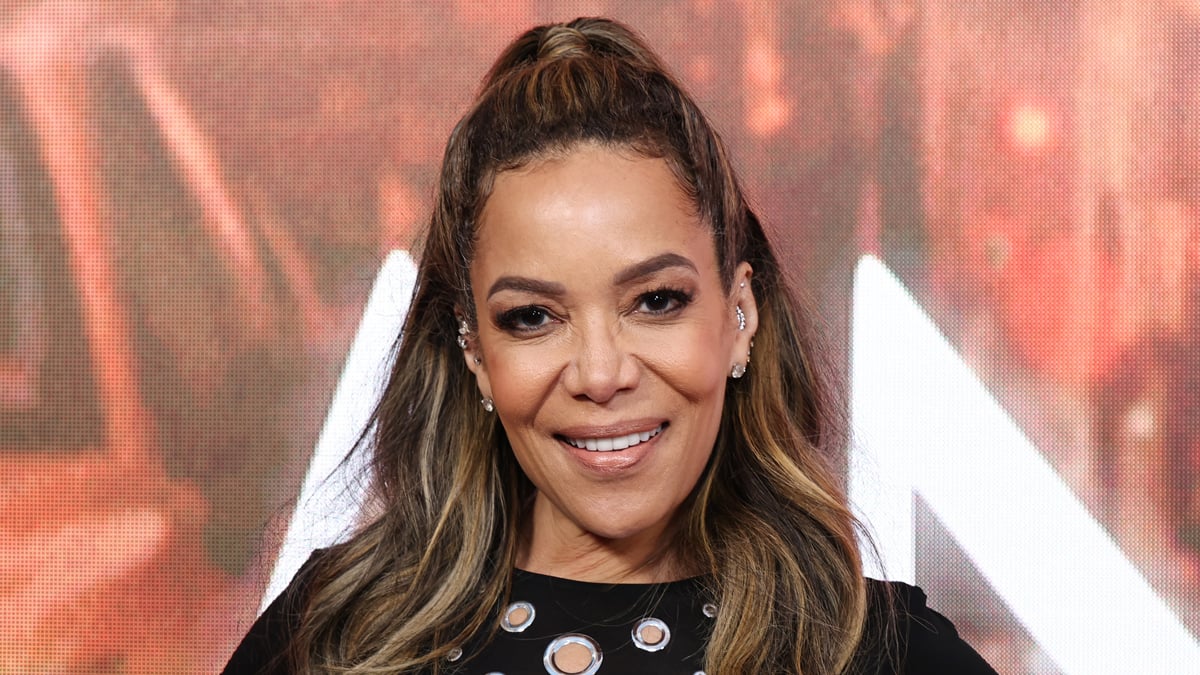
Cynthia Erivo Called Sunny Hostin After That Viral Cornell 7 Clip: “Lead With Empathy”
The View co-host says Erivo saw only the controversial snippet, knew it did not reflect Hostin’s larger body of work and offered advice that changed the next conversation.
There are celebrity phone calls, and then there are celebrity phone calls that arrive precisely when the internet has clipped you into a villain edit.
Sunny Hostin says Cynthia Erivo reached out after a segment on The View about the Cornell 7 went viral, telling her that the short video circulating online did not reflect the person she knew. The conversation, Hostin later explained, became less about defending a television moment and more about the difference between being technically correct and being heard.
That is a very Cynthia Erivo intervention: direct, warm, a little theatrical in the best way, and apparently delivered with enough clarity to make a television legal analyst reconsider her opening line.
The clip that sent everyone into the group chat
Hostin’s original comments came during a discussion of allegations involving several Cornell University fraternity students. The allegations date to 2024 and have recently returned to the spotlight through social media, a high-profile civil lawsuit and a reopened criminal investigation, according to Just Jared.
On the show, Hostin led with her reading of New York law and argued that voluntary drug or alcohol use, by itself, does not legally establish an inability to consent. She referred to statements attributed to the woman at the center of the case and said a prosecutor would not have brought charges based on the facts as she understood them.
The clip traveled online without much of the surrounding conversation, turning a complicated legal discussion into the kind of sharply edited television moment that can make a person look as though they wandered into the segment carrying only one emotion: confidence.
Hostin said on Behind the Table, the podcast connected to The View, that she approached the subject in “black-and-white” legal terms because that is how she understands her role on the panel. She felt the other co-hosts had already spoken from an emotional perspective, so she wanted to explain the law first.
But she also acknowledged that legality and morality are not interchangeable. “The morality of what happened is very different from the legality of what happened,” she said, explaining that she became more comfortable addressing the moral dimension during the show’s second segment.
Enter Cynthia Erivo, with notes
According to Hostin, Erivo called after seeing only the viral clip. The actor and singer reportedly told her: “Sis, I know you and I know your heart and your life’s work has been about protecting women and children. But, the clip that I saw doesn’t reflect who you are.”
That is a remarkably intimate kind of celebrity support: not “ignore the haters,” not “post a statement,” but “I know this isn’t you, and we need to talk about how you got here.”
Hostin said the two bonded over being blunt people who prefer to “get the BS out” when they speak. Erivo’s advice, however, was that bluntness is not always the same thing as effectiveness. She told Hostin she had learned to offer people her opinion in a way they could actually receive.
In other words: the point may be legally sound, but if you lead with the statute and leave empathy waiting in the greenroom, viewers may hear something very different from what you intended.
Hostin said that advice changed how she handled the follow-up discussion. Rather than beginning with the law, she began with empathy and then explained the legal standard she was discussing. She said New York law, as she understands it, requires a person to be completely unconscious, explicitly refuse, or have been involuntarily drugged for certain sexual-assault claims involving intoxication to meet the legal threshold she was describing.
That explanation did not erase the original clip. The internet is not famous for restoring context once it has found a satisfying villain-shaped rectangle. But it did give the moment a more revealing second act: a public figure being told by another public figure that the order of her argument had become the argument.
The celebrity friendship nobody knew we needed
Hostin and Erivo are not an obvious public duo, which is exactly why the call lands as such a good piece of celebrity culture. One is a longtime television host and attorney who regularly translates legal and political stories for a daytime audience. The other is a globally recognized performer whose public image mixes powerhouse vocals, red-carpet glamour and a notably candid way of speaking about identity, creativity and feeling.
Yet Hostin says they get along because they share the same instinct: say the thing plainly. The difference, apparently, is that Erivo has been learning how to make plain-speaking land without allowing the delivery to swallow the message.
That is the social-media lesson hiding inside this very television-heavy drama. A viral clip is not simply a shorter version of a conversation. It is a new performance, stripped of setup, tone and the tiny signals that tell viewers how to interpret what they are hearing. In a story involving sexual-assault allegations and consent, those missing signals matter even more.
Hostin’s clarification also explains why Erivo’s call mattered to her. She was not describing a random industry acquaintance parachuting in with a public-relations suggestion. She was describing someone who knew her well enough to separate intent from impact, then cared enough to say so privately.
And now that private conversation has become part of the public story, because of course it has. The original clip made Hostin look immovable. The follow-up makes her look more interesting: still convinced of her legal analysis, but willing to admit that the way she presented it failed to carry the full person behind it.
For Erivo, meanwhile, this is an unusually backstage glimpse at the kind of friend she may be when the cameras are off: not a hype woman exactly, but a glamorous, emotionally literate editor. The note was not “be less intelligent.” It was “make room for people to hear you.”
In the current celebrity ecosystem, that may be the rarest kind of advice: useful, unsponsored and delivered before the apology tour starts.
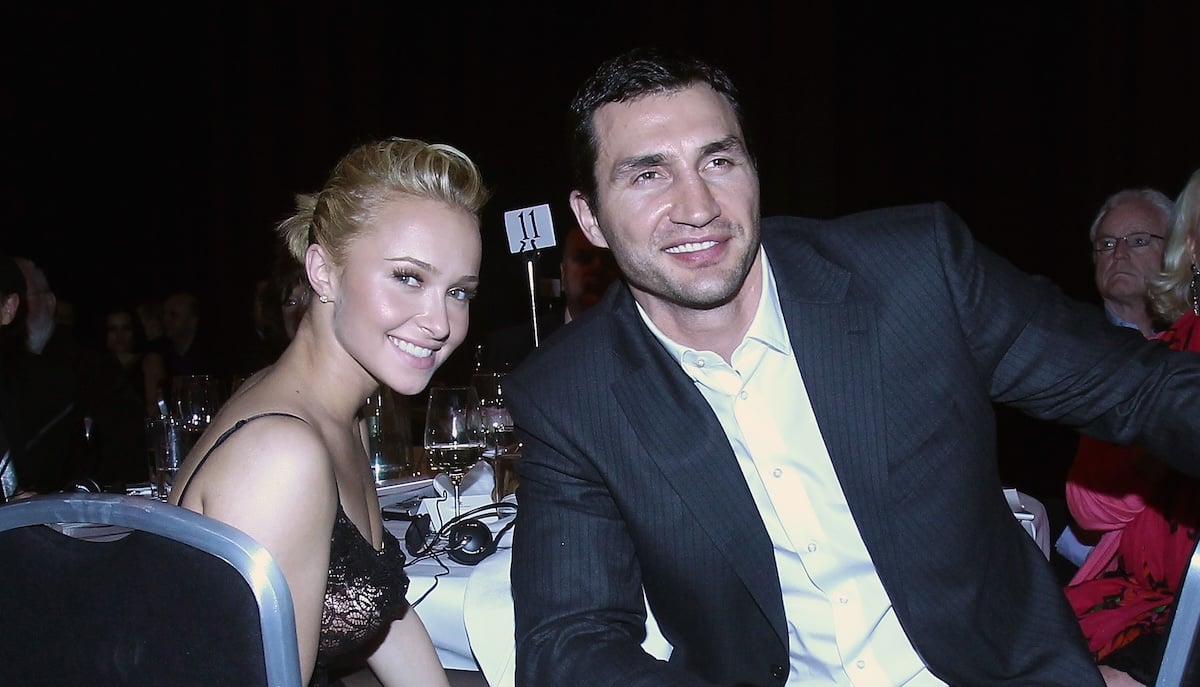
Hayden Panettiere’s Missing Jewelry Is Now Part of a Very Complicated Family-Court Drama
Wladimir Klitschko says a non-family member may have pawned some of his late ex-fiancée’s belongings—and he wants the court to let him involve law enforcement.
Hayden Panettiere’s jewelry has wandered into the kind of celebrity saga that begins with a court filing and ends with everyone staring at the timeline like it is a crime thriller. Her former fiancé, Ukrainian boxing champion Wladimir Klitschko, says he believes someone connected to Panettiere may have taken some of her belongings to a pawn shop, possibly including jewelry. Now he wants the legal authority to help investigate what happened.
According to court documents obtained by TMZ and described by Just Jared, Klitschko says a “non-family member” who had previously been connected to Panettiere may have pawned some of her property. He reportedly believes jewelry was among the items. The pawn shop allegedly would not provide information without police involvement, and Klitschko expressed concern that the belongings could be sold before anyone could recover them.
It is a strange, grimly glamorous detail in an already emotional legal situation: a former heavyweight champion, a Hollywood actress, a missing jewelry trail and a pawn shop holding the possible key. But beneath the tabloid-ready setup is a more consequential question about who has the authority to protect Panettiere’s property and handle matters involving her daughter.
The Jewelry Question Is Tied to Kaya’s Inheritance
Klitschko’s claims appear in paperwork connected to his request to be named legal guardian for the couple’s daughter, Kaya. He already has sole custody, according to the report, but he says he needs to be formally appointed guardian in order to assist with Kaya’s inheritance and manage certain issues connected to Panettiere’s estate.
That is why the missing-property allegations are not being presented as a random dispute over sentimental possessions. Klitschko says recovering Panettiere’s belongings could directly affect what ultimately belongs to Kaya. He is asking for the guardianship appointment to include the power to request and authorize a law-enforcement investigation into property he believes may have been misappropriated.
The court has not yet made a decision. And, importantly, the filing reflects Klitschko’s belief about what may have happened—not a court finding that anyone pawned Panettiere’s jewelry or took her property.
Just Jared reports that Klitschko had already raised concerns in an earlier guardianship petition. Those concerns reportedly included missing jewelry, property that may have been held by police or seized by federal agents, and emails that he said had been accessed and destroyed. He also said Panettiere had hired a security company before her death after a documented concern involving someone who allegedly gained unauthorized access to her home.
That collection of details gives the story its unnerving shape. The pawn-shop claim is not standing alone; it is part of a broader effort to untangle Panettiere’s possessions, digital accounts and home-security history while Klitschko seeks a formal role in protecting their daughter’s interests.
From Hollywood Engagement to Co-Parenting Across Continents
Panettiere and Klitschko first met in 2009, beginning a relationship that quickly became one of those celebrity pairings nobody could resist discussing: the petite television star and the famously towering world-champion boxer. They dated for roughly two years, split, then reunited in 2013 and became engaged.
In 2014, the couple welcomed Kaya. Their relationship ended in 2018 after years together, but the breakup did not erase the family connection. The following year, it became public that Kaya was living with Klitschko in Ukraine while Panettiere dealt with personal struggles. The arrangement generated intense public conversation at the time, particularly because Panettiere’s career had made her recognizable long before the details of her family life became tabloid material.
Panettiere’s public story has often been reduced to crisis headlines: the former Heroes star, the Nashville actress, the custody questions, the difficult years. The current filing adds another layer, but it also shifts the focus away from the familiar celebrity-breakdown narrative and toward the practical complications that remain after a death: property, access, legal authority and inheritance.
Klitschko has continued to speak publicly about his commitment to Kaya. After Panettiere’s passing, he released a statement reflecting on the promise he had made to their daughter, according to the report. The guardianship request appears to be connected to that responsibility, as well as to the need to deal with Panettiere’s assets.
A Pawn Shop Is a Very Specific Kind of Hollywood Mystery
There is an especially potent cultural charge to the phrase “pawned jewelry.” It suggests something immediate and transactional: valuable objects leaving one person’s possession, a clock ticking toward resale, and a paper trail that may disappear unless someone moves quickly. It is less polished than a courtroom battle over an estate and far more cinematic than a routine guardianship petition.
But the filing, as described, does not identify the person Klitschko believes may have taken the items. It also does not establish exactly what was pawned, whether Panettiere’s jewelry was involved, or whether any criminal conduct occurred. The shop’s alleged refusal to provide information without police participation appears to be one reason Klitschko is seeking broader authority through the court.
That uncertainty is doing a lot of work here. Fans and celebrity-news watchers may be tempted to turn the unnamed “non-family member” into a character, but the documents described in the report do not provide a name. The responsible part of the story is also the least satisfying: the alleged trail cannot be followed publicly until the court decides who can investigate and what information can be obtained.
For now, Panettiere’s missing belongings sit at the intersection of grief, family law and celebrity mystery. Klitschko is asking for the ability to protect Kaya’s inheritance and pursue property he believes may have been taken. The court has not ruled, and the jewelry’s fate remains unresolved.
Still, the image is hard to shake: somewhere in the paperwork surrounding a famous actress’s estate, a pawn shop may be holding a piece of the story. And until someone gets permission to ask the next question, that may be the most Hollywood sentence in the entire filing.