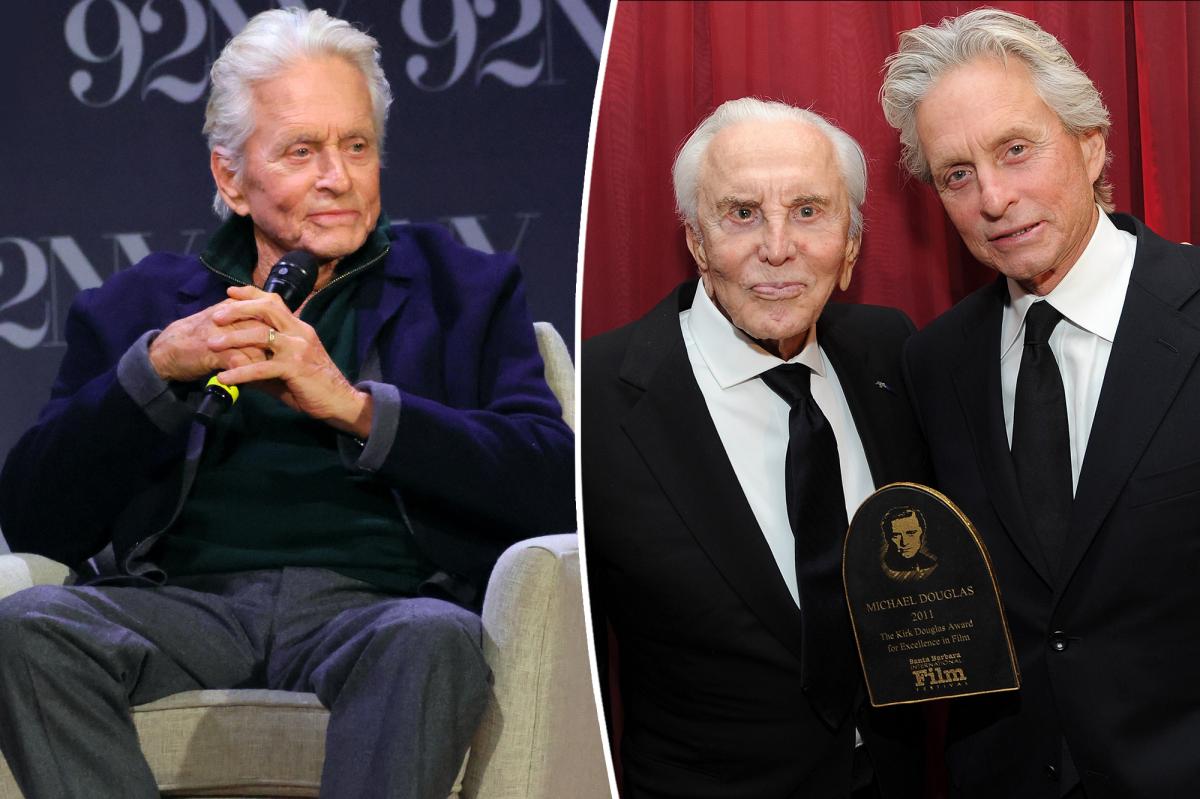
Michael Douglas Says “Nepo Baby” Is an “Unfortunate” Label—While Raising Three Actors of His Own
The “Wall Street” star is pushing back on Hollywood’s favorite family-tree insult, but his candid advice to his children is refreshingly less glossy: if you hate rejection, pick another career.
Michael Douglas would like a word with the internet’s favorite two-word Hollywood insult: “nepo baby.”
“I think it’s an unfortunate title,” the 82-year-old actor told Page Six while promoting his memoir, One Helluva Ride. And honestly, the timing is impeccable. Douglas is not merely the son of a Hollywood legend. He is the son of Spartacus star Kirk Douglas, an Oscar-winning actor in his own right, and the father of three children who have pursued acting careers. If anyone is standing directly in the blast radius of the nepotism conversation, it is Michael Douglas.
His argument is familiar but newly polished for the memoir-tour circuit: every parent tries to help their child, he said, and every family business has some version of inheritance baked into it. His more personal point is that a famous surname may open a door, but it does not guarantee a standing ovation once you walk through it.
The Douglas family business has been open for three generations
Douglas pointed out that his own family story did not begin in a gilded Hollywood mansion. His grandfather was a junkman, he noted, while Kirk built a career that lasted more than six decades and turned his name into a piece of movie history. Michael, meanwhile, had to find his own identity under a surname that arrived in the room before he did.
That is the particular awkwardness of being a legacy actor: the privilege is obvious, but so is the pressure. Early in his career, Douglas said, people would tell him, “You remind me so much of your father.” He thanked them out loud. Internally, however, he was thinking: “I don’t want to hear that. I’m going to be my own person.”
He eventually did. The “Wall Street” performance that won him an Oscar, the seductive menace of “Basic Instinct,” and the adventure-comedy charm of “Romancing the Stone” helped separate Michael Douglas from Kirk Douglas without requiring him to pretend Kirk had not existed. That is a tricky Hollywood magic trick: inherit the spotlight, then convince everyone you are not standing in somebody else’s beam.
In his memoir, Douglas describes carrying “the weight of my legendary father’s legacy.” The phrasing is grand, but the family history makes it hard to call it melodrama. Kirk died in February 2020 at 103, leaving behind not just a filmography but a very specific kind of old-school movie-star mythology. Michael was never going to be allowed a completely anonymous entrance.
Then he and Catherine Zeta-Jones built a sequel cast
The nepo baby conversation gets even more pointed because Douglas and his wife, fellow Oscar winner Catherine Zeta-Jones, have two children who are pursuing acting: Dylan, 26, and Carys, 23. Douglas’s oldest son, Cameron, 47, from his marriage to Diandra Luker, is also an actor.
That is not a family dabbling in one school play and calling it a destiny. Douglas told Page Six that Dylan and Carys have been acting since kindergarten, appearing in plays, shows, summer theater camps and graduation productions. His defense is essentially that the work began before the headlines did.
Still, Hollywood families do not get to choose whether the audience notices the elevator they rode up in. Dylan and Carys have been raised around premieres, award-season tuxedos, famous friends and two parents whose names already carry their own lighting package. Their talent may be sincere and their effort may be substantial, but the access is also real. Both things can exist at once, which is why the nepo-baby debate refuses to die politely.
Douglas does not seem interested in pretending otherwise. His advice to his children is surprisingly blunt: “If you don’t like rejection, don’t do it.” It is less a motivational poster than a warning label. Acting is not presented as a royal inheritance here; it is a family profession with an unusually public audition process and a comment section attached.
Kirk was “worried”—and Michael now gets why
Douglas also recalled that Kirk was worried when his son decided to become an actor. That detail gives the whole argument a more interesting shape. The original Hollywood patriarch apparently understood that his surname could be both a launchpad and a trap. Michael would have the chance to get noticed faster, but he would also be measured against a man who had spent decades becoming “Kirk Douglas.”
Now Michael is watching his own children walk toward the same family weather system. He says all three are talented and that he thinks “it will all work out.” It is a generous parental assessment, though one with the faintly ominous undertone of a father who knows exactly how brutal the business can be.
He also clarified that Cameron is working now, a reference that sits alongside the family’s more difficult history. Cameron has spoken publicly about addiction and served seven years in federal prison on drug-related charges. In Douglas’s telling, the family story is not a perfectly staged dynasty portrait. It contains career pressure, addiction, prison, grief, reinvention and the sort of personal turbulence that does not disappear simply because the family has good photographers.
That may be the memoir’s real pitch: not “look how effortlessly Hollywood works when your father is famous,” but “look at what happens when one family keeps trying to make a life inside the machinery.”
The problem with the word is that it is both true and incomplete
Douglas is right that “nepo baby” can flatten a complicated career into a punchline. It can make every success look pre-approved and every failure look like a family embarrassment. But the label also exists because famous children do receive advantages that ordinary hopefuls do not: introductions, visibility, name recognition and the freedom to keep trying after a bad first impression.
Michael Douglas’s version of the story lands somewhere more compelling than a clean denial. He is not claiming he entered Hollywood with no help. He is saying help is not the same as a finished career. His father’s name may have gotten him into the conversation, but Michael still had to become Michael Douglas—and then, decades later, raise children who will have to become themselves beneath two very recognizable surnames.
That is the slightly glamorous, slightly cursed inheritance of the Douglas family: the door is open, the room is watching, and everybody already knows who your parents are.

William Shatner Is 95, Has Asked “What the F Is Heavy Metal?” and Is Now Fronting a Band Called The *uckers
Captain Kirk’s latest strange new world is loud, profane and unexpectedly committed — with a heavy metal album on the way and a Brad Paisley collaboration queued up behind it.
William Shatner has spent six decades boldly going where very few entertainers have gone before: from the bridge of the Star Trek Enterprise to spoken-word versions of “Lucy in the Sky with Diamonds,” from a trip into space to, apparently, the front line of heavy metal.
At 95, the actor has found a new musical frontier — and his first question upon being invited into it was exactly the one you might expect from a beloved television legend who had not been keeping up with the mosh pit.
“When they said, ‘How’d you like to do a heavy metal album?’ I said, ‘What the F is heavy metal?’” Shatner told Page Six at the New York premiere of The Sixty-Year Mission: How Star Trek Changed Television and the World on Thursday.
Then came the plot twist: “And that’s the title of the album,” he revealed.
Captain Kirk Has Entered His Headbanger Era
There is something almost aggressively Shatner about this career turn. Heavy metal is built on theatricality, oversized emotion and a willingness to commit to a bit until the bit becomes an entire universe. Shatner, meanwhile, has spent years treating music less like a conventional singer’s lane and more like another stage on which to deliver a performance.
He is not pretending he was born with a leather jacket and a record collection full of obscure guitar bands. Shatner freely admitted that the genre was initially unfamiliar to him. But the unfamiliarity did not last. He told Page Six that he has since come to love heavy metal, praising its “energy and vitality.”
That enthusiasm has already moved beyond the recording studio. Shatner debuted his heavy metal band, The *uckers, at Riot Fest 2026 in Chicago, where he performed in September. The group is also planning tours in Australia and Florida, meaning this is not merely a studio experiment being announced with a dramatic flourish and then quietly abandoned.
It is, at least for now, a full-on new chapter: a nonagenarian Star Trek icon fronting a band with a name that looks like it was designed to make every headline editor pause for one delicious second.
The Man Has Been Making Unexpected Music Since the ’60s
Shatner’s heavy metal detour only seems to come from nowhere if you have forgotten that his relationship with music has always been gloriously strange.
His recording career began in 1968 with The Transformed Man, an album of dramatic spoken-word renditions of songs including Bob Dylan’s “Mr. Tambourine Man” and the Beatles’ “Lucy in the Sky with Diamonds.” The record has lived on as a pop-cultural curiosity because Shatner does not approach those songs like a traditional vocalist. He attacks them with the full Captain Kirk arsenal: pauses, declarations, sudden emotional weather and the sense that every syllable has just been beamed in from a more serious dimension.
Decades later, he teamed up with Ben Folds for 2004’s Has Been, a project that gave his theatrical delivery a more deliberate musical setting. He followed that with Seeking Major Tom, a collection of space-themed covers that included Elton John’s “Rocket Man.” Because of course it did.
More recently, Shatner released 2024’s So Fragile, So Blue, inspired by his journey into space aboard a Blue Origin spacecraft and recorded with the National Symphony Orchestra. That album placed him in a grand, orchestral register. The heavy metal project swings in the opposite direction, at least sonically: less cosmic reflection, more amplified impact.
But the through line is obvious. Shatner has never treated genre as a fence. If a musical idea offers him a new atmosphere, a new voice or a new theatrical playground, he appears willing to step through the airlock.
Heavy Metal First, Country Next
The amusing part is that Shatner’s metal album is not even the only new music waiting in the wings.
He is also releasing Love & Other Mysteries, an album he worked on with country music icon Brad Paisley. So the current Shatner rollout appears to involve both heavy metal and country — two genres that do not exactly share a closet, unless that closet belongs to someone who has already performed dramatic Beatles covers and gone to space.
Paisley is a particularly intriguing collaborator for Shatner because the pairing gives the project a different kind of celebrity voltage. One album promises the spectacle of Captain Kirk embracing metal; the other comes with the polish and Nashville credibility of one of country music’s best-known guitarists. Shatner is not choosing one lane. He is building a small highway system.
There is also a mischievous logic to the timing. At 95, Shatner could be expected to coast comfortably on the cultural power of Captain Kirk. Instead, he is still introducing himself to new genres, taking the stage with a new band and talking about the process with the delighted disbelief of someone who has accidentally discovered an entirely new hobby — then booked an international tour.
Still Going Where No Kirk Has Gone Before
Shatner was at Thursday’s premiere to celebrate The Sixty-Year Mission, a documentary he executive produced about the enduring legacy of Star Trek. The film includes interviews with franchise figures including Jonathan Frakes, Simon Pegg, Robert Picardo, Brent Spiner and Ethan Peck, giving the evening a suitably intergenerational feel.
That backdrop makes his musical announcement even more entertaining. The event was about honoring a franchise that has spent 60 years imagining the future, and Shatner arrived with news that his own future includes heavy metal.
It is tempting to describe the whole thing as a novelty, because the facts are inherently funny: William Shatner, age 95, once asked what heavy metal was and now has a band called The *uckers. But the joke works because there is a real history underneath it. He has been recording for decades. He has collaborated with Ben Folds and Brad Paisley. He has made music about space, worked with an orchestra and performed live.
Shatner is not suddenly pretending to be someone else. He is doing what he has always done, only louder: taking a familiar persona, pushing it into an unexpected setting and seeing how far the performance can travel.
And if Captain Kirk’s latest mission involves Australia, Florida and a heavy metal album titled after his own initial confusion, well — that is a strange new world we are perfectly happy to visit.
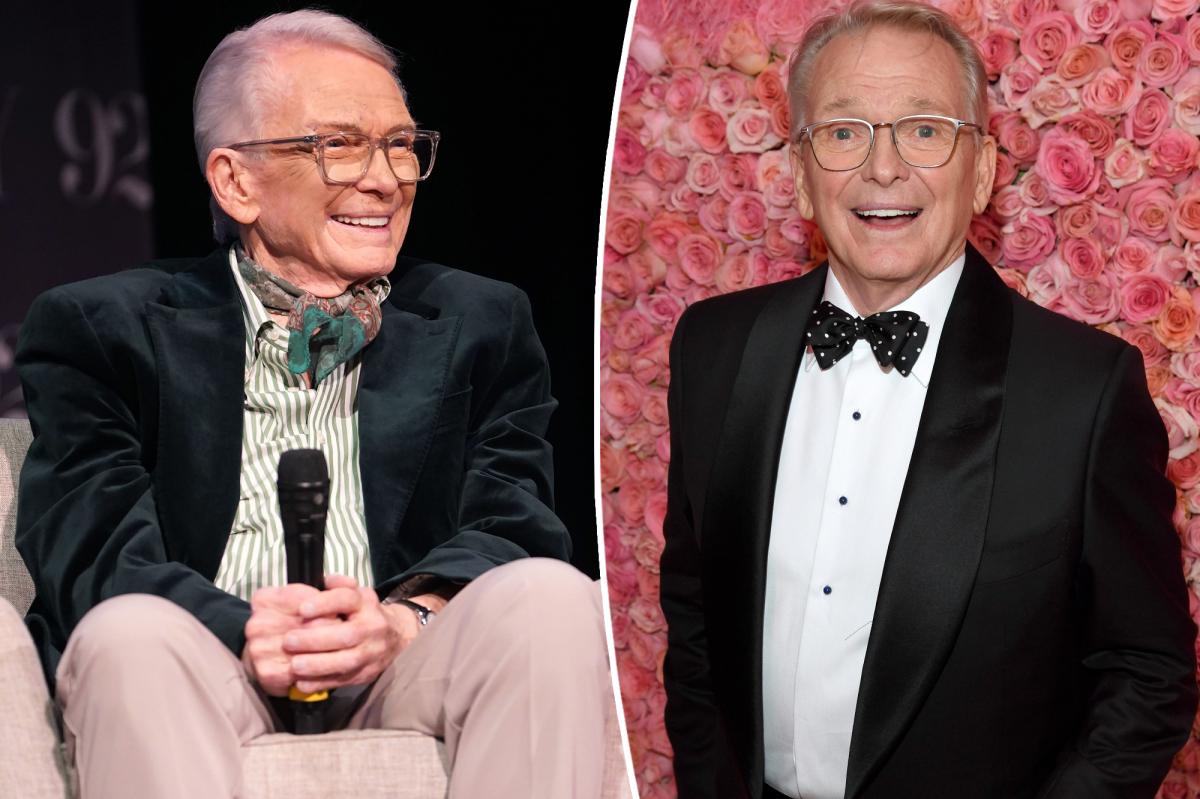
Bob Mackie’s Final Days Were More Complicated Than the First Announcement Suggested
The legendary designer died after a fall and head injury, while also battling pneumonia. His death certificate fills in the quiet, heartbreaking timeline behind fashion’s most theatrical legacy.
Bob Mackie spent his career making entrances impossible to forget. Cher in glitter. Carol Burnett in a curtain rod. Diana Ross in a silhouette that seemed to arrive before she did. Dolly Parton in rhinestones, feathers and pure Dolly logic. His clothes did not simply decorate pop culture; they helped teach it how to be larger than life.
So the new details surrounding Mackie’s death feel unusually stark. According to a death certificate obtained by Us Weekly, the legendary designer suffered a fall at the Palm Springs-area home of his longtime design director, Joseph McFate, on Sept. 11. The document lists a subarachnoid hemorrhage and blunt head trauma as the cause of death. Mackie died three days later, on Sept. 14, at Desert Regional Medical Center. He was 87.
The information adds a painful second chapter to the initial announcement, which attributed his death to pneumonia. A representative later clarified that both things were part of Mackie’s final days: he had been battling pneumonia before the hospitalization and continued to suffer from it afterward. The rep told Us Weekly that Mackie was staying in a guest house at McFate’s home and that a healthcare professional was with him when he fell.
The timeline behind the headlines
Mackie’s death was announced on the day he died in a statement shared through his social media accounts. “He lived his 87 years to the fullest,” the statement said, describing fashion and costume design as the dream he had always wanted to fulfill. It was a fitting tribute to a man whose work rarely showed interest in understatement, even when the person wearing it did.
The death certificate states that Mackie was cremated on Sept. 17, three days after his death, and that his remains were scattered at sea off the coast of San Diego County. There is something quietly cinematic about that final image: the designer who spent decades creating spectacle leaving the world without one last red carpet, just the ocean and the people closest to him.
It also gives the first announcement a more complicated emotional shape. Pneumonia was not incorrect, according to the representative’s clarification, but it was not the entire story. The fall and resulting head injury were central to the final medical timeline, while the illness Mackie had already been fighting remained part of it.
A career built for the spotlight
Mackie’s genius was understanding that celebrity clothing is never just clothing. It is character development, mythology and a little bit of mischief stitched together. He designed for the women who turned performance into identity: Cher, Ross, Tina Turner, Beyoncé, Parton and Burnett among them. The outfits often looked outrageous in still photographs and completely inevitable once the star stepped into them.
For Cher, Mackie helped create the barely-there, feathered, beaded and body-conscious visual language that became inseparable from her image. For Burnett, he understood the comic power of a costume that could land a joke before she delivered a line. For Parton, he found a shared vocabulary of glamour that never treated sparkle as an apology.
That work earned Mackie a rare status in entertainment: he was famous beyond the fashion world because his designs were attached to moments people remembered. His name became shorthand for a certain kind of unapologetic showmanship, the kind that enters the room wearing its own lighting.
His last public chapter still looked like Bob
Mackie remained active and visible deep into his eighties. He appeared at events connected to the documentary Bob Mackie: Naked Illusion, including its Los Angeles premiere in May 2024, and attended the Season 2 finale event for Palm Royale in January. He was also photographed at the Met Gala in 2019 and at the Costume Designers Guild Awards in February 2025.
Those appearances made clear that Mackie’s influence had outlived any single era of television or red-carpet dressing. He was not merely being celebrated as a vintage name. His ideas were still circulating everywhere: in the return of maximalist glamour, in performers treating the red carpet as theater, in the ongoing refusal to believe that a famous woman should ever wear just one rhinestone when 10,000 are available.
One of his final public gestures involved Parton. When she died at 80 in late August, Mackie posted a tribute alongside sketches of the outfits he had designed for her over the years. “Dolly was a lovely soul and spirit who was fair to everyone,” he wrote, calling her “a joy and pleasure to dress” and adding, “You will be missed. With love, Bob Mackie xo.”
The timing makes the tribute especially poignant. Mackie was honoring one of his most enduring creative collaborators only weeks before his own death. The sketches offered a glimpse of their partnership in its earliest, most essential form: line, shape, fantasy, then the transformation of a person into an icon.
Fashion loves to talk about legacy as if it is a polished archive, neatly labeled and safely behind glass. Mackie’s is messier and more alive than that. It is in the costumes people still imitate, the old clips that keep resurfacing, the red carpets that seem determined to get bigger, brighter and more theatrical. His final days were marked by illness, a fall and a devastating injury. His career, however, remains gloriously upright: sequined, feathered and refusing to leave quietly.