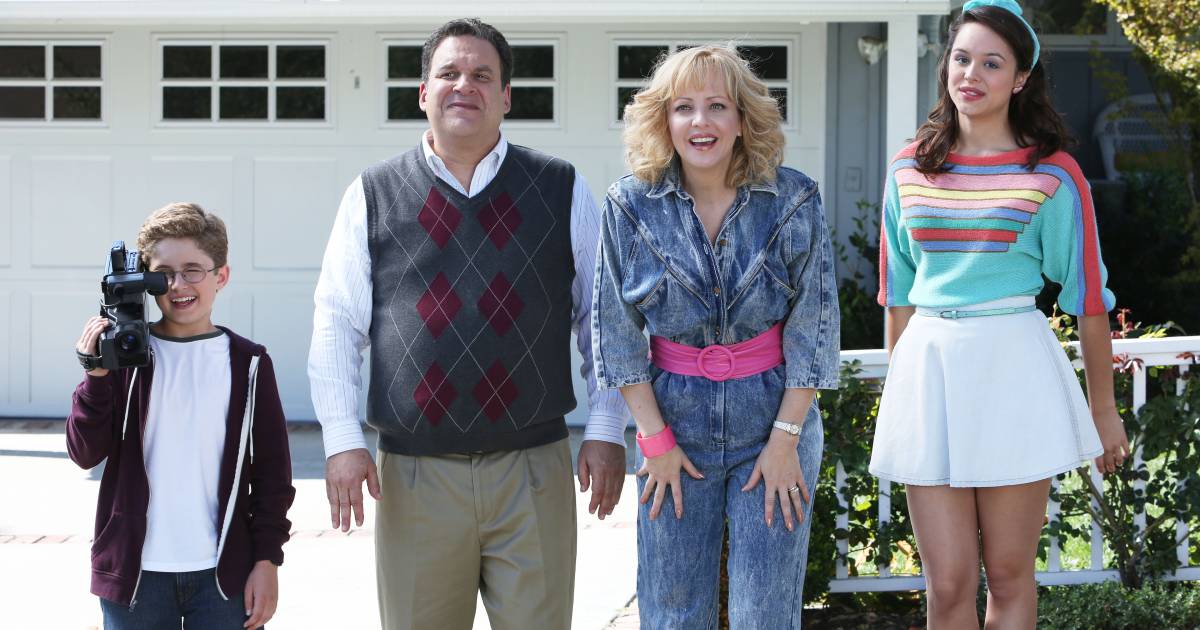
The Goldbergs’ Family Reunion Just Turned Into a Very Public Costar War
Jeff Garlin says Wendi McLendon-Covey was resentful after he left the sitcom. Her response: she, the crew, the cast and the executives remember it very differently.
Some sitcom marriages are built to survive anything: meddling in-laws, sentimental holiday episodes, a suspiciously enormous kitchen and, apparently, years of unresolved workplace tension. The one between Jeff Garlin and Wendi McLendon-Covey on The Goldbergs has now entered a less cuddly genre: the post-show costar feud, complete with competing memories and a sentence sharp enough to make an entire writers’ room sit up.
Garlin, who played family patriarch Murray Goldberg opposite McLendon-Covey’s Beverly for eight seasons, recently revisited his exit from the ABC comedy on the Daily Beast’s Obsessed podcast. He said his undiagnosed bipolar disorder contributed to the way he behaved on set, described himself as miserable with the show and recalled receiving support from McLendon-Covey before ultimately deciding he had to leave.
Then he added the line that sent the old sitcom tension back into the group chat: “And she was very resentful.”
Wendi McLendon-Covey has entered the chat
McLendon-Covey did not answer with a glossy statement or a carefully sanded-down publicist paragraph. She responded in a social media comment, writing: “Let’s just say I remember things very differently, as does the crew, the other actors, the writers, and our executives.”
That is not quite a rebuttal; it is a whole conference room forming a rebuttal. The message widens the dispute beyond two actors with different recollections and invokes the people who were there every day: the crew, the rest of the cast, the writers and the executives. In other words, McLendon-Covey’s version of events is not that one relationship went sour. It is that Garlin’s account leaves out the wider atmosphere on the show.
Garlin’s comments were more complicated than a simple “I left because of her.” He said he empathizes with McLendon-Covey because he was undiagnosed bipolar at the time, and described his behavior as moving between extreme darkness, manic energy and being “really, really mean.” He also said he did not believe her support was enough to change the situation and that he eventually reached the point where he had to quit.
McLendon-Covey’s response, meanwhile, lands with the exhausted precision of someone who has already lived through the argument and is not interested in reenacting every scene. Her phrasing suggests that the disagreement is not about one emotional farewell or one bruised ego. It is about what the day-to-day experience of making The Goldbergs was actually like.
The sitcom was already carrying a lot of baggage
This is not the first time Garlin’s departure has been discussed as a workplace story rather than a standard television contract shuffle. In December 2021, reports emerged alleging a pattern of verbal and physical conduct that made people uncomfortable on the set. Garlin denied the accusations after a human resources investigation and told Vanity Fair that there was nothing physical “by any stretch of the imagination.” He characterized the verbal incidents as jokes that had been missed or misunderstood.
He also rejected the idea that he had been fired, saying, “No, I was not fired from The Goldbergs. I have not been fired from The Goldbergs.” But he was ultimately released from his contract in 2021, and Murray was written out of the series. The show continued for another season before ABC canceled it after 10 seasons.
At the time, Garlin framed the situation through his own frustration with the culture around comedy and political correctness. In the newer podcast conversation, the mental-health context appears more prominently. He connected his behavior to an undiagnosed condition and spoke about being unhappy with both the production and his performance.
Those explanations can coexist with McLendon-Covey’s account, but they do not magically merge into one tidy sitcom-ending narrative. A person can look back and understand their own behavior differently years later while the people around them remember the impact of it in a much less forgiving way. That gap is exactly where this public disagreement lives.
Her 2023 comment now reads very differently
McLendon-Covey has been less mysterious about her feelings than the soft-focus nostalgia usually surrounding a long-running comedy. In 2023, appearing on Andy Cohen’s SiriusXM show, she described Garlin’s exit as having been “a long time” coming. When it finally happened, she said, “OK, OK. Finally someone is listening to us.”
That quote already made it clear that Garlin’s departure was not experienced by everyone as a devastating loss to the family. His latest remarks have now pulled that old comment back into circulation, giving fans a new timeline for the tension: the support he remembers, the resentment he says followed, and McLendon-Covey’s insistence that the people working on the show remember the situation differently.
The difference between those two perspectives is also a reminder of why costar feuds hit differently when the show itself is built around family. The Goldbergs sold warmth, chaos and the idea that everyone would eventually pile into the same living room. Behind the scenes, the central marriage was apparently much less Hallmark-ready. For viewers, the off-screen conflict can feel like an unauthorized bonus season—especially when the actors are now supplying competing director’s cuts.
There is no indication that McLendon-Covey and Garlin are preparing some dramatic reunion special, and neither has suggested that this exchange is part of a planned promotional rollout. This is simply an old workplace fracture resurfacing because one former costar offered a new explanation and the other declined to let that explanation stand alone.
Garlin has spoken about his mental health and his regret around the period. McLendon-Covey has spoken about the relief she felt when the situation changed. Both are now attached to the show’s legacy, but they are not telling the same story about what it took to keep the Goldberg family running.
And if McLendon-Covey’s latest comment is any indication, she is not interested in being cast as the resentful wife in Garlin’s version of the finale. She remembers a different show, a different workplace and, judging by that very pointed list of fellow witnesses, a very different reason the family sitcom finally lost its dad.
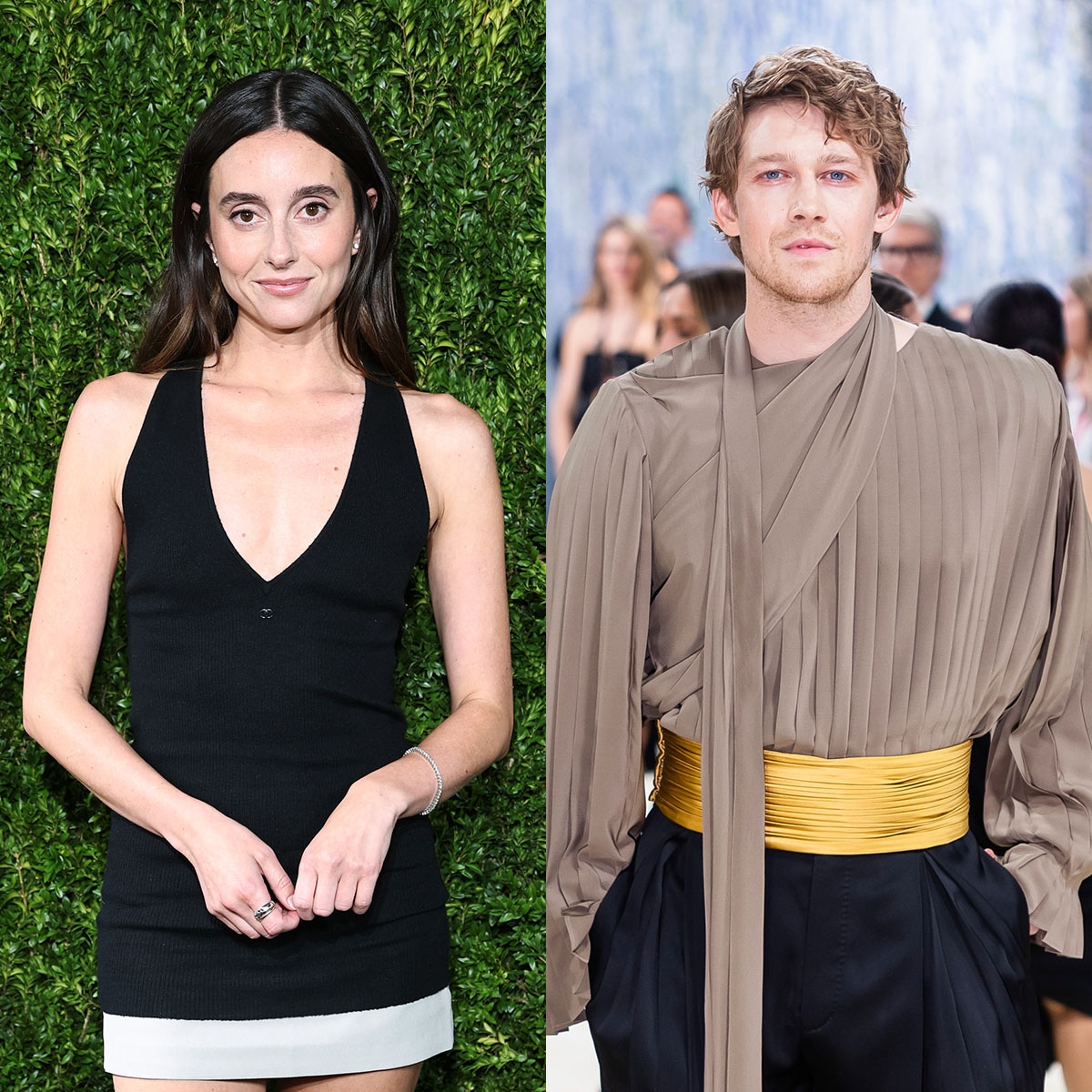
Joe Alwyn and Mary Beth Barone Didn’t Hard-Launch a Romance. They Hard-Launched the Rom-Com Instead.
After a Williamsburg Bridge stroll sent the internet into detective mode, Barone clarified her Joe Alwyn situation with a selfie, a movie announcement and one extremely online caption.
For one brief, beautiful moment, the internet thought Joe Alwyn had entered his comedian era.
Less than a week after Alwyn and Mary Beth Barone were photographed walking across New York’s Williamsburg Bridge, stopping at a local bar and chatting over drinks—with Barone apparently wearing Alwyn’s baseball hat—the pair has offered a clarification. Not a denial, exactly. Not a romance announcement, either. Something much funnier: a movie announcement wearing the clothes of a relationship hard launch.
On Sept. 22, Barone posted a screenshot announcing that she and Alwyn will star in Still We Met, an upcoming rom-com she is also writing. The project will be executive produced by Lena Dunham and follows “a young woman at a crossroads who meets a charming British stranger and spends one unforgettable night wandering New York.”
Then Barone added a silly selfie of herself and Alwyn in a dimly lit restaurant and captioned the whole thing: “Hard launching this project.”
That is not the caption of a woman unaware of what the internet was doing with those Williamsburg photos. It is the caption of someone who saw the rumor cycle, understood its assignment and decided to redirect the spotlight toward a film with a plot that sounds almost suspiciously well-timed.
The Hat, the Bridge and the British Stranger
The speculation began on Sept. 17, when Barone and Alwyn were seen together in New York. In the modern celebrity rumor economy, that is more than enough raw material: two attractive adults, a bridge with cinematic lighting, a bar stop and one borrowed hat. The internet did what it does best, which is turn a casual outing into a developing limited series.
Alwyn, 35, is recognizable far beyond his acting credits. He spent six years dating Taylor Swift, a relationship that became part of the mythology surrounding her music even while the couple kept their private life largely private. He was also most recently linked to Sarah Pidgeon in June, according to E! News. Barone, also 35, is an actor and comedian known for Overcompensating and Galaxy Brain, as well as the Ride podcast. She previously dated actor Edward Bluemel from 2021 to 2024.
Put those two people together in Brooklyn and the internet does not see “coworkers discussing the third act.” It sees a question mark with excellent cheekbones.
The upcoming movie only made the sighting more deliciously on-the-nose. Its premise involves a woman meeting a charming British stranger and spending a memorable night wandering New York, which makes the Williamsburg Bridge photos feel less like random paparazzi material and more like an aggressively effective mood board.
Mary Beth Barone’s Favorite Genre Is Apparently the Bit
Barone’s response also tracks with her existing relationship to publicity, romance rumors and the increasingly blurry line between a joke and a campaign strategy.
In July, during an appearance on Late Night with Seth Meyers, she joked that she had briefly been in a fake relationship with Lucas Bravo to promote her Netflix special Galaxy Brain. Barone said Netflix offered the possibility of a “PR relationship” after she asked about a marketing budget, and that she chose Bravo, the actor known for playing the chef Gabriel on Emily in Paris.
She described a mock romance involving courtside seats at a Knicks game and the Cannes Film Festival, then deadpanned that they had “to have sex a few times for legal reasons.” Her punchline: “We’re not together anymore, though. We just did the three-month contract.”
That story was clearly a joke, but it established Barone’s preferred response to the machinery of celebrity speculation: do not panic, do not issue a solemn statement, and absolutely do not waste a perfectly good rumor when you can turn it into material.
So when a real-life-looking stroll with Alwyn started circulating, her “Hard launching this project” caption landed like a tiny publicist’s grenade. The romance was the bait; the rom-com was the reveal.
Even the Group Chat Got an Update
The post apparently did not only reach curious fans. Barone’s Overcompensating costar Benny Drama—whose real name is Benito Skinner—commented, “U guys can stop texting me now !”
It is a small line, but it tells the whole story: the rumor had already escaped the original photos and entered the group-chat phase, where friends, costars and acquaintances are expected to provide live commentary on every suspiciously photogenic outing.
Barone’s post gave everyone a cleaner storyline. She and Alwyn are starring together in a project. She is writing it. Dunham is executive producing. The two were photographed together in the city. The movie’s premise is romantic. And neither Barone nor Alwyn has said they are dating.
That combination is catnip because it leaves just enough room for the internet’s favorite sport—overinterpretation—without requiring anyone to pretend a restaurant selfie is a marriage announcement.
It also gives Alwyn an unusually playful pop-culture moment. Since his split from Swift, public attention around his personal life has often been filtered through the shadow of that six-year relationship and the songs fans associate with it. Here, he appears in a dim restaurant selfie beside a comedian who is not treating the situation like a solemn mystery. The tone is lighter, stranger and much more Barone-coded: if people are going to turn your evening into a romance narrative, at least give them a screenplay.
A Soft Launch for a Movie, a Hard Launch for the Joke
Celebrity “hard launches” usually arrive with a kiss, a birthday tribute or a caption that quietly upgrades “mysterious person in the photo” to “the love of my life.” Barone has borrowed the language and swapped in a project. That is the gag, but it is also a sharp little commentary on how quickly professional chemistry and personal chemistry get mashed together online.
Actors are photographed together because they are working. Comedians understand that being photographed together can also become the work. In this case, Still We Met appears to be benefiting from the exact confusion its stars just cleared up. A movie about a woman and a charming British stranger wandering New York now has an origin story involving two stars who were briefly mistaken for the movie’s leads in real life.
That is an excellent premise for a publicity cycle, whether anyone planned it that way or not.
For now, the most accurate description is also the funniest one: Mary Beth Barone and Joe Alwyn have hard-launched a movie. The romance rumors can take a seat. Preferably at the bar, wearing someone else’s baseball hat, while New York does the rest.
Taylor Swift Wore Her New Song’s Date-Night Top Before She Even Announced It
The black lace Staud cami from Taylor Swift’s “Patient Zero” cover art already had a Travis Kelce-era cameo — and naturally, Swifties are looking at the outfit like it might be plotting something.
Taylor Swift has announced a new song, dropped three pieces of cover art and reminded the internet that, in her universe, a black lace top can have a full supporting role.
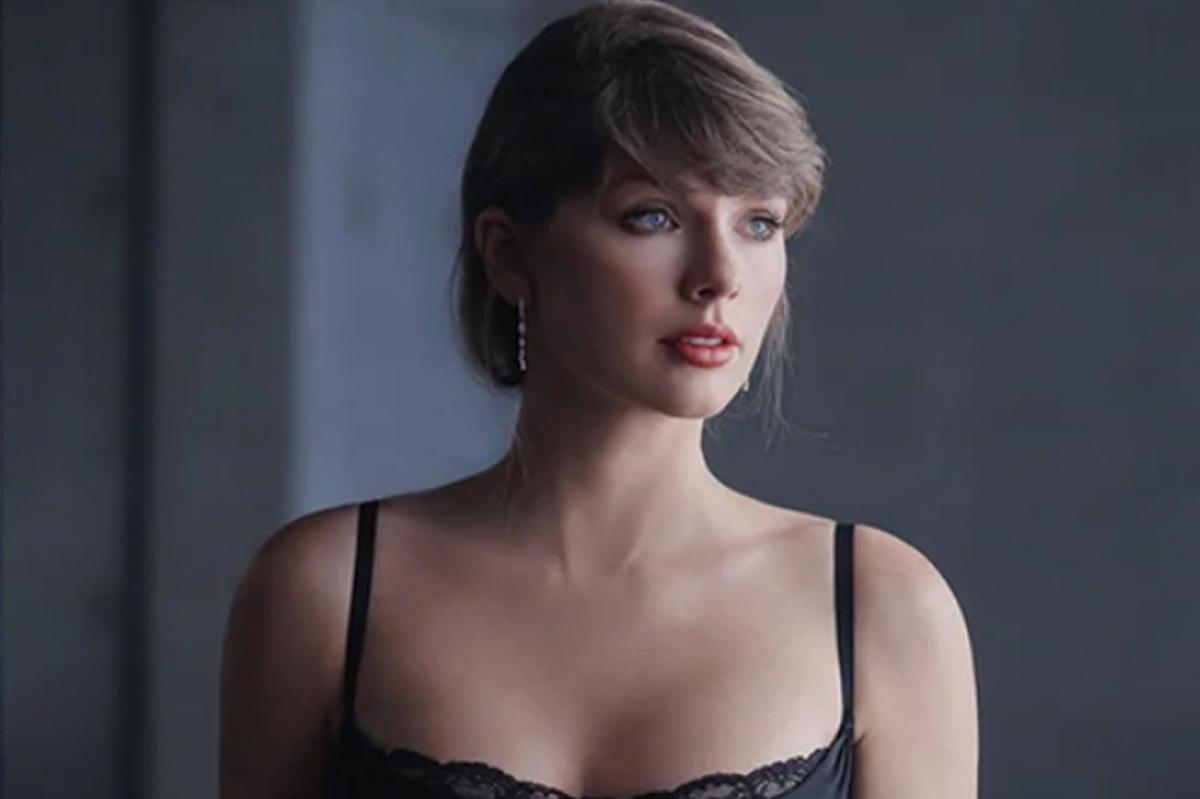
On Tuesday, Swift revealed that “Patient Zero” will arrive September 25, sharing one of three single covers on Instagram and writing that she had been “impatiently waiting” to tell fans. The image is sleek, shadowy and deliberately unbothered: Swift in profile, looking like she knows exactly how many group chats are about to lose their minds.
But the most immediately clickable detail is not the song title or the release date. It is the top.
On the cover, Swift wears a black lace Staud Evangeline Silk Top, a draped cami with a date-night silhouette and a $325 price tag. The top is pretty, a little dangerous and polished enough to pass through a restaurant reservation desk without looking like it tried too hard. More importantly, Swift has worn it before — during a London night out with Travis Kelce in May.
The top already had a London love-story cameo
For that earlier appearance, Swift paired the Staud cami with a matching Fleur du Mal skirt, a Toteme leather coat, a Rabanne bag and Celine sandals. It was the kind of outfit that says “romantic evening” while maintaining the logistical discipline of a woman who knows there will be photographers outside.
Now the same top has been promoted from stylish date-night supporting player to single-cover lead. Is that an Easter egg? Page Six wisely notes that calling the garment itself a clue may be a stretch. But stretching is practically a fan pastime at this point, particularly when Swift repeats an item in a new era and the item has already appeared during a public night out with her now-husband.
The fun is not necessarily in pretending the top contains a secret message. The fun is in watching Swift’s wardrobe acquire continuity. A look that once belonged to an evening in London can be pulled back into the story months later, given a new pose, a new mood and a much larger audience. In Swift’s hands, clothes do not merely complete an outfit. They can be rerun, recast and quietly upgraded into mythology.
Swift’s favorite fashion trick is making a palette feel suspicious
This is also not the first time Staud has appeared near a Swift music tease. Ahead of her contribution to the “Toy Story 5” soundtrack, she stepped out in New York wearing a blue-and-white striped Staud midi dress with a yellow Lady Dior bag, Christian Louboutin sandals and her signature red lipstick.
The combination echoed the red, blue and yellow palette associated with the animated franchise. It was not exactly a hard launch from the outfit itself, but it was visually legible enough to send the internet into its preferred state: delighted, over-caffeinated pattern recognition.
That is Swift’s particular fashion magic trick. She does not need every look to be a coded dispatch. She only needs the styling to be specific. A striped dress, a yellow bag, a red lip. A black lace cami that reappears from a London date night on the cover of a surprise single. The details are strong enough to invite interpretation without requiring a corkboard and several hours of sleep deprivation.
And the Staud top is an especially effective choice because it occupies the exact middle ground Swift has made her own in recent years: romantic but not fussy, glamorous but wearable, sultry without turning the entire look into a performance of seduction. It is the sort of piece that can go from dinner to a cover shoot simply by changing the lighting and adding a little narrative pressure.
“Patient Zero” arrived with maximum Swift efficiency
The song announcement itself was classic Swift-era event planning. She did not spend weeks slowly warming up the room with a conventional rollout. Instead, she appeared with a title, a release date, pre-orders open for 24 hours and three covers ready to be examined from every angle.
Fans were quick to react to the surprise, and the announcement became one of Page Six’s most-shared stories, with the related coverage drawing significantly more attention than the shopping angle alone. That makes sense: the top is cute, but the larger appeal is the collision of a new Taylor Swift song with the possibility that an old outfit has just been pulled back into the spotlight for a reason.
There is also something deliciously efficient about using one garment twice. Swift gets the romance of a remembered look and the visual freshness of a new image, while fans get an entirely new object of fascination. It is sustainable fashion, but make it pop-star semiotics.
Neither Swift nor Kelce has said that the Staud top is meant to signal anything about “Patient Zero.” It may simply be a favorite piece that photographed beautifully. That explanation is less explosive, but it is also part of the appeal: sometimes the internet does not need a confirmed clue. It needs a good top, a suspiciously perfect timeline and a superstar who understands that people will notice everything.
The real Swiftie luxury is looking casually unforgettable
The Evangeline Silk Top is currently listed at $325, which places it in the category of aspirational date-night dressing rather than an accidental checkout add-on. Still, the styling blueprint is easy to understand. Pair a draped black cami with a slim skirt or tailored trousers, add a coat with enough structure to make the lingerie-inspired texture feel intentional, then keep the accessories sharp and the lipstick decisive.
In other words: do not dress like you are waiting for a music video to happen. Dress like you have somewhere to be after the music video wraps.
That may be why this particular Swift outfit is already doing more cultural work than a standard single-cover look. It connects the new release to a recognizable public chapter — London, Kelce, date night, the polished private-life theater of the Swift-Kelce era — without needing to explain itself. The top has a past, the song has a future and the internet is thrilled to stand in the middle, staring at both.
“Patient Zero” arrives September 25. Until then, Swifties have three covers to inspect, one black lace top to overanalyze and approximately 72 hours to decide whether a cami can be an Easter egg. History suggests they will find a way.